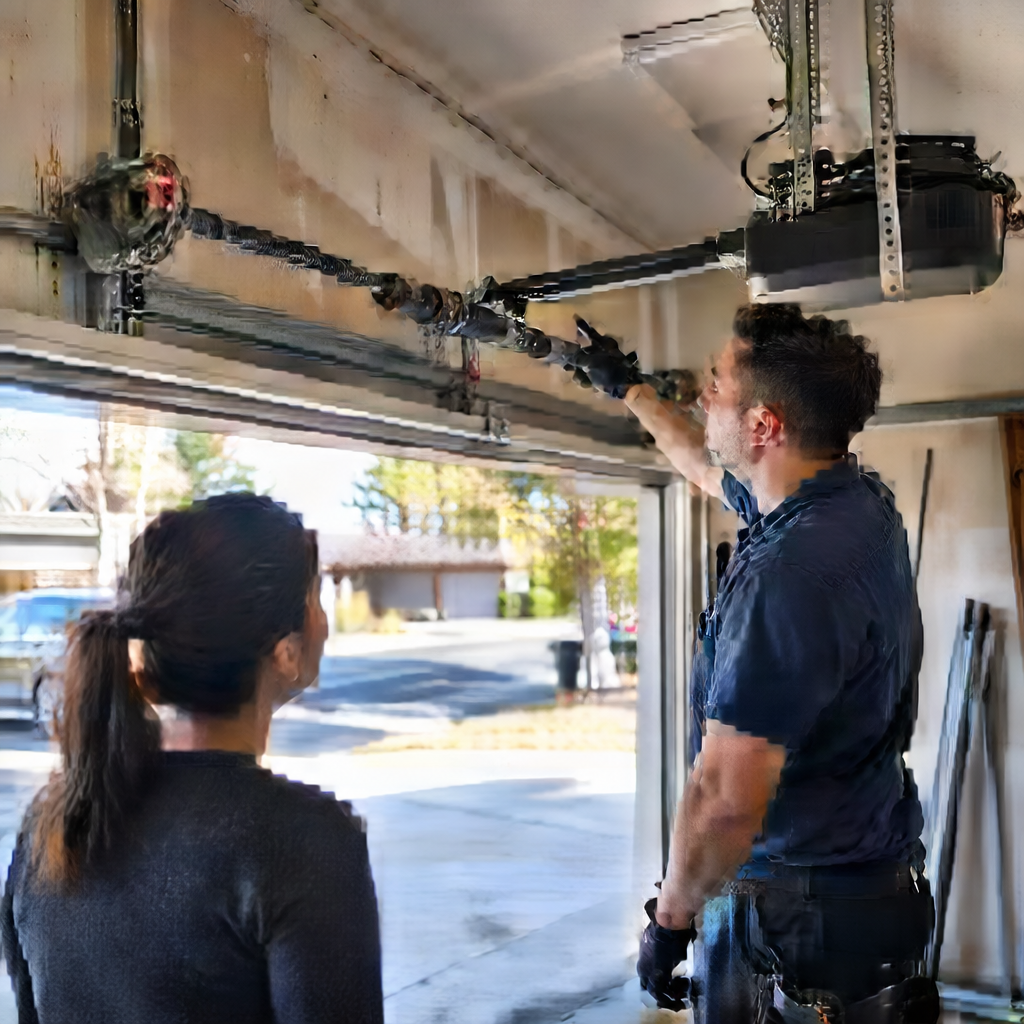
Signs of a Broken Garage Door Spring in San Jose, CA — What to Look For Before It Gets Worse
A broken garage door spring usually announces itself one of four ways: the door won’t move at all, it rises only a few inches before stalling, it looks visibly crooked as it opens, or you heard a sharp bang from the garage — sometimes described as a firecracker going off — right before everything stopped working. If any of those match what you’re dealing with right now, call (833) 991-7288 and Anthony Perez will take a look. Spring failures don’t fix themselves, and the longer a broken spring sits under load, the more stress it shifts onto your opener, cables, and drums.
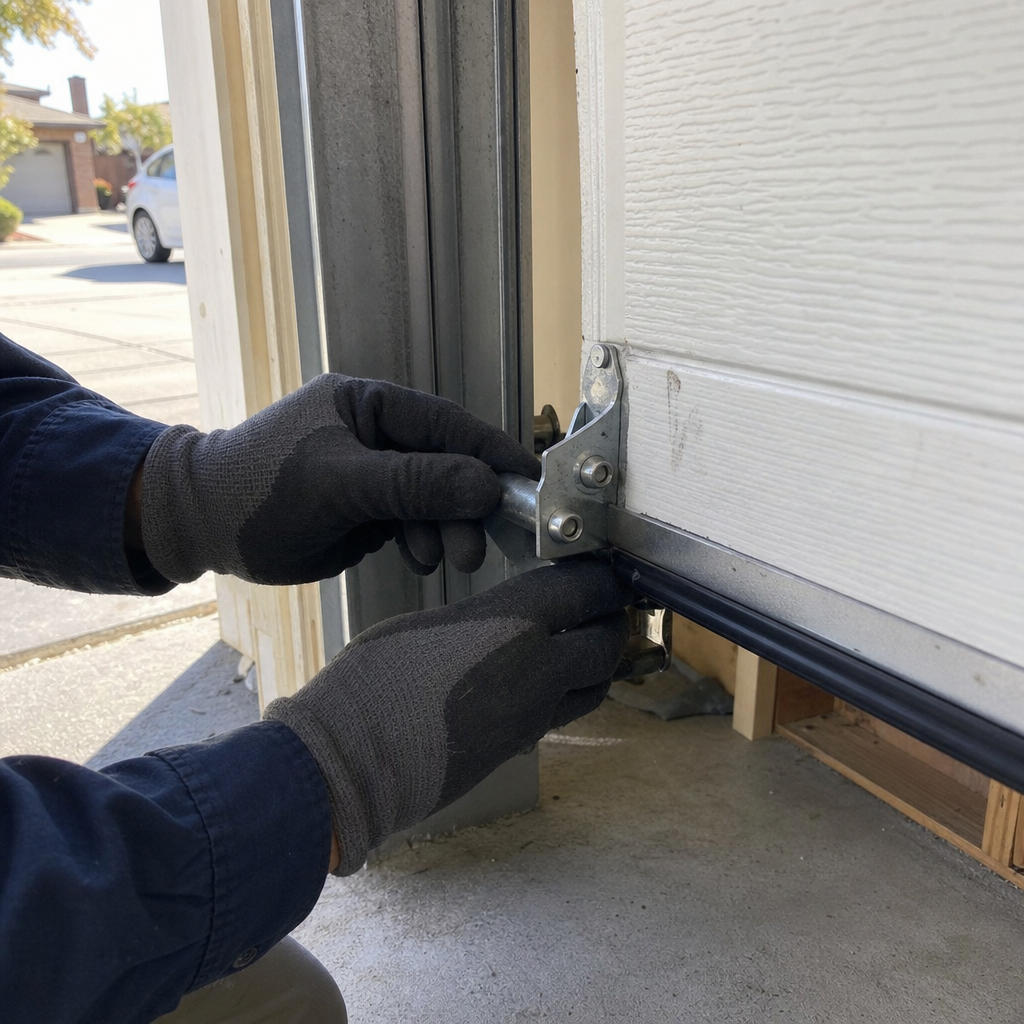
Safety note: Garage door torsion springs operate under extreme tension — enough to cause serious injury or death if handled incorrectly. Do not attempt to manually wind, unwind, or remove a spring. The information below is designed to help you recognize and describe the problem, not to guide a DIY repair. Always contact a trained technician.
Why San Jose Homes See Spring Failures More Than Owners Expect
San Jose’s marine layer plays a bigger role in spring wear than most homeowners realize. Cool, moist Bay air pushes into the Santa Clara Valley most mornings before the afternoon sun burns it off. That daily cycle of thermal contraction and expansion quietly fatigues torsion springs over months and years — particularly in the older ranch-home neighborhoods of Cambrian and Berryessa, where 40- to 60-year-old doors are still in regular use. A spring that was spec’d for a lighter door in 1978 has been working harder than it was ever designed to.
Anthony Perez grew up in Willow Glen and has been diagnosing doors across San Jose for over 14 years. He learned the mechanical side through hands-on building trades coursework at Evergreen Valley College, and one pattern he sees consistently: homes in Berryessa and along the Story Road corridor were originally built with 8-foot single-door openings or narrow 15-foot doubles — dimensions that often required non-standard spring setups from the start. When those springs finally break, replacement isn’t always as simple as swapping in a stock part. A garage door doesn’t lie — it shows you exactly what’s been ignored.
The Seven Warning Signs of a Broken Garage Door Spring
Not every spring failure is a sudden event. Many give you a few days of warning if you know what to watch for. Here’s what to look for:
- The door won’t open at all. This is the most common presentation of a fully broken torsion spring. Your opener motor may run and strain, but the door stays on the floor. Forcing it will damage the opener.
- The door opens 6 inches, then stops. Most modern LiftMaster and Chamberlain openers include auto-reverse protection that detects abnormal resistance. When a spring breaks mid-cycle, the opener senses the load and halts — which is exactly what it’s supposed to do.
- A loud bang from the garage. Torsion springs store enormous energy. When one snaps, it sounds like a rifle shot or a falling object. If you heard that sound and nothing else seems out of place in the garage, check the spring bar above your door.
- The door looks crooked or one side hangs lower. On two-spring systems, one broken spring shifts the entire load to the remaining spring and cables. The door will visibly sag or tilt on the weak side.
- Gaps or separation in the spring coil. Walk to the front of your garage and look up at the horizontal metal bar above the door opening. A broken torsion spring will show a visible gap — usually 1 to 3 inches — where the coil has separated.
- The door feels extremely heavy when lifted manually. A properly balanced door should feel nearly weightless at waist height. If you disengage the opener and the door feels like it weighs 80–100 pounds, the spring tension is gone.
- Cables are loose or lying on the floor. Springs and cables work as a system. When a spring breaks, the cables it supports go slack and can unspool from the drums. Loose cables are a secondary sign worth noting when you call.
What a Spring Repair Actually Costs in San Jose
Spring repair in the San Jose market typically runs $210–$400, covering parts and labor. That range moves based on spring type (torsion vs. extension), spring size and wire gauge, and whether one or both springs need replacement. On most double-car doors, Anthony replaces both springs at the same time even if only one has broken — the second spring has the same wear history, and replacing one while leaving the other means a follow-up call within months.
| Service | San Jose Price Range |
|---|---|
| Spring Repair (torsion or extension) | $210–$400 |
| Cable Repair | $155–$295 |
| Opener Repair | $140–$380 |
| Roller Replacement | $130–$260 |
| Full Garage Door Repair | $175–$710 |
If a spring failure has been running your Chamberlain or Genie opener against a door it couldn’t move, it’s worth having the opener checked at the same visit. Repeated strain from a broken spring is one of the more common causes of premature opener motor failure — and catching it early is considerably cheaper than an opener replacement. If you need specific parts sourced while the job is being scoped, Anthony can also walk you through what’s available for Garage Door Parts in San Jose to keep the repair on the same visit.
How to Confirm a Broken Spring Before You Call — A Safe Visual Check
You don’t need to touch anything to gather useful information for the technician. Here’s a safe way to assess the situation from a distance:
- Do not operate the door with the opener. Running the motor against a spring-dead door can strip gears or burn out the motor. Disconnect power to the opener if you can do so safely from the wall switch or by unplugging the unit.
- Stand inside the garage, facing the door, and look at the torsion bar. This is the horizontal metal shaft mounted above the door opening. The spring (or springs) wraps around it. Look for a visible gap or break in the coil.
- Check whether the cables are still taut. The lift cables run from the bottom corners of the door up to drums on each end of the torsion bar. If they’re lying in a heap or visibly slack, note that for your call — it tells the technician what replacement parts to bring.
- Try lifting the door by hand — carefully, just a few inches. With the opener disengaged, grip the door at the bottom and lift gently. If it feels unusually heavy and doesn’t want to stay up at any height, the spring tension is gone. Set it back down immediately.
- Note the door brand and approximate age if you can find it. A Clopay sticker on the inside panel or a manufacture date stamped on the door frame helps Anthony arrive with the right spring specs, especially on older non-standard doors common in the Berryessa area.
Once you have those observations, a call to (833) 991-7288 takes about two minutes. Anthony can often diagnose the spring type and size over the phone before he arrives, which means the repair gets done in a single visit rather than a parts run in the middle of the job.
For homeowners who rely on the home as their primary entry point — especially on properties where the interior garage door is the main way in and out — a broken spring isn’t a deferred maintenance item. It’s an access and security issue that deserves same-day attention.
Frequently Asked Questions About Broken Garage Door Springs in San Jose
Look for a visible gap in the coil of the torsion spring mounted above your door — a broken spring will show a clear separation, usually 1 to 3 inches wide. You can spot this from inside your garage without touching anything. Other visual signs include slack or piled-up lift cables at the bottom corners of the door, or a door that sits noticeably lower on one side. If you’re unsure what you’re seeing, call (833) 991-7288 and describe it — Anthony can usually tell you over the phone.
Spring repair in San Jose typically costs between $210 and $400, depending on spring type, wire gauge, and whether one or both springs need replacement. Most double-car doors use a two-spring system, and replacing both at the same visit is standard practice — it avoids the second spring failing within months of the first. Call (833) 991-7288 for a free estimate with no obligation.
Yes — torsion springs store enough mechanical energy to cause serious injury if they release unexpectedly during winding or removal. This is one repair that should always be handled by a trained technician with the proper winding bars and safety equipment. The cost of professional spring repair is a fraction of an ER visit. Anthony handles every spring job personally, so you know exactly who’s doing the work.
Most modern openers — including LiftMaster and Chamberlain units — will detect the abnormal load from a spring-dead door and stop after a few inches to prevent motor damage. Continuing to run the opener against a broken spring risks stripping gears or burning out the motor, turning a $210–$400 spring repair into a much larger job. Disconnect the opener and leave the door closed until the spring is replaced.
If you’re seeing any of the signs above, Premier Garage Door Service San Jose is ready to help. Anthony Perez will assess the spring, explain exactly what needs to be done, and give you a straight answer on whether repair or replacement makes more sense for your door. No pressure, no runaround. Call (833) 991-7288 for a free estimate — same-day visits are available for urgent situations.
Written by Anthony Perez, Owner & Lead Technician at Premier Garage Door Service San Jose, serving San Jose, CA.