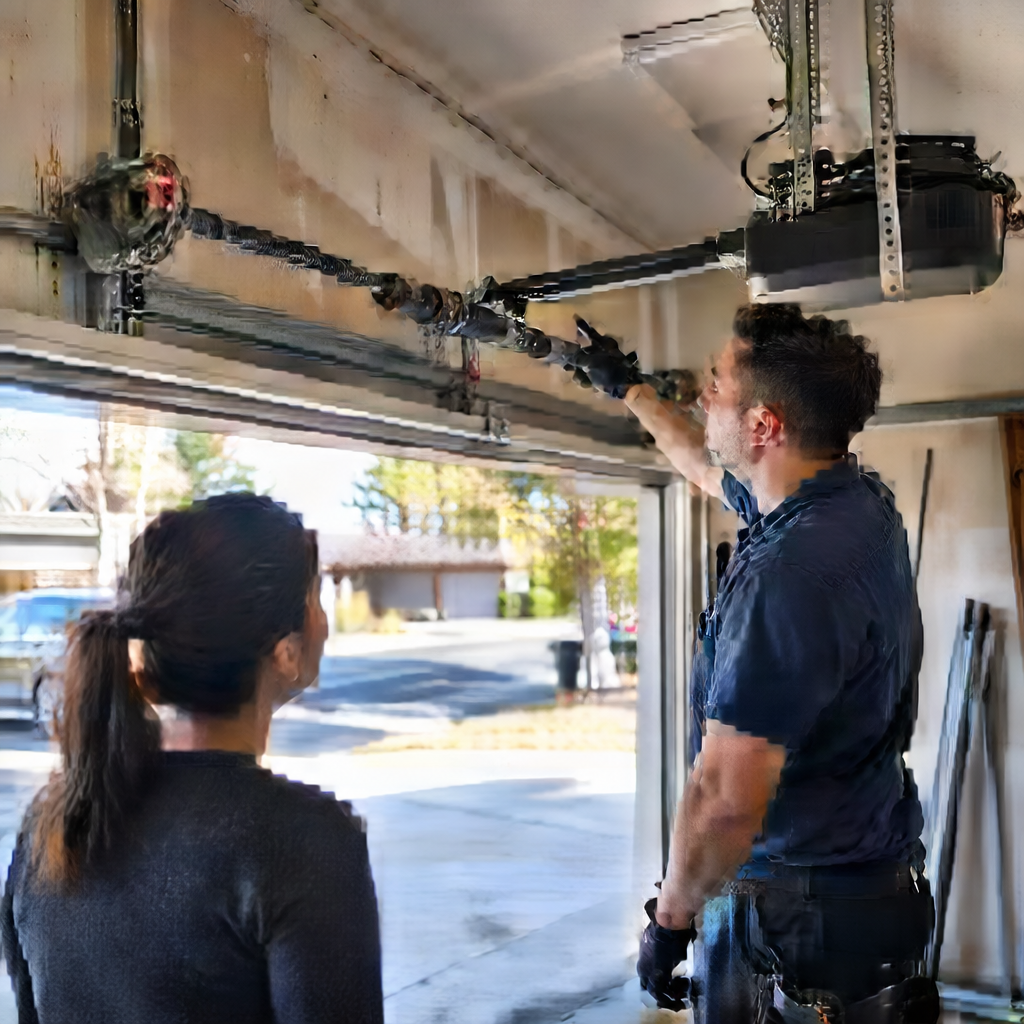
How to Program a Garage Door Opener in San Jose, CA — A Step-by-Step Guide That Actually Works
To program most garage door openers, you press and hold the “Learn” button on the motor unit until the indicator light turns on, then press and hold your remote button until the light blinks — confirming the pairing. That’s the core process for the majority of systems you’ll find in San Jose homes, though the exact button sequence varies by brand and model year. If you’re working through it and nothing’s clicking, call (833) 991-7288 — Anthony Perez, Owner and Lead Technician at Premier Garage Door Service San Jose, can walk you through your specific setup or come out same day.

Why San Jose Homes Add a Layer of Complexity to This
Programming a garage door opener sounds straightforward until you’re standing in your garage in Berryessa or Cambrian staring at a unit that went in during the Clinton administration. San Jose’s postwar housing stock means a huge share of attached-garage ranch homes across East San Jose, Alum Rock, and the Story Road corridor are still running openers that are 25 to 40 years old — some of which predate modern rolling-code technology entirely.
Older fixed-code openers (common in pre-1996 installs) program differently than rolling-code units, and some won’t pair with universal remotes at all. If your motor unit has a row of small DIP switches inside the remote and inside the motor head, you’re on a fixed-code system. Matching those switches manually is the programming method — not a Learn button.
There’s also a California-specific wrinkle worth knowing: under AB 869, effective July 1, 2019, any new residential opener installed in the state must include battery backup. If your San Jose home has a pre-2019 opener and you’re replacing it — even just because programming failed — that replacement unit needs to meet this requirement. It’s not optional. The law was shaped directly by Bay Area power-outage experience following events like Loma Prieta, and it’s a real compliance point that comes up on virtually every opener replacement job Anthony handles in neighborhoods like Evergreen and Silver Creek.
Step-by-Step: How to Program Your Garage Door Opener Remote
The steps below cover rolling-code systems, which represent the vast majority of openers installed in San Jose after 1996. Craftsman, Wayne Dalton, and Raynor units from this era all follow this general sequence, though button labels vary slightly.
- Locate the “Learn” button on the back or side panel of the motor unit mounted to your ceiling. It’s usually a small colored button — green, yellow, orange, or purple depending on the brand and frequency.
- Press and release the Learn button. The indicator light next to it will turn on. You now have approximately 30 seconds to complete the next step before the window closes.
- On your remote, press and hold the button you want to program until the motor unit’s light blinks or you hear two clicks. That blink or click is the confirmation signal.
- Test the remote from outside the range of the motor unit — at least 20 feet away — to confirm it’s actually communicating with the opener and not just triggering locally.
- For a keypad, press the Learn button, then enter your desired PIN on the keypad and press Enter. Same 30-second window applies.
- For smart app-based openers (common in newer Evergreen and Silver Creek homes with LiftMaster myQ or Chamberlain systems), the pairing is done through the app rather than a physical Learn button sequence — follow the in-app device setup flow instead.
If the light doesn’t blink after step three, the remote’s battery may be dead, the frequency may not match the opener, or the unit’s memory may be full. Most openers store up to 40 remote codes; clearing the memory and starting fresh sometimes resolves a stubborn pairing failure.
When the Programming Itself Isn’t the Problem
Here’s something Anthony says often after 14 years of hands-on work across San Jose: a garage door doesn’t lie — it shows you exactly what’s been ignored. A remote that won’t program after multiple attempts is frequently a symptom of a larger issue, not just a battery or a mismatched frequency.
Common culprits he sees regularly on San Jose service calls:
- Logic board failure. If the Learn button light doesn’t illuminate at all, the board may be burned out — especially on units 15+ years old that have cycled through San Jose’s daily marine-layer humidity for decades. The cool, moist Bay air that pushes into the Santa Clara Valley each morning accelerates corrosion on exposed circuit boards faster than homeowners expect.
- Sensor misalignment. Safety reversal sensors that are out of alignment will prevent the opener from completing a cycle, which can look like a programming problem when it’s actually a mechanical one.
- Power interruption reset. After a power outage — more common in San Jose than many residents realize, given the Calaveras and Hayward faults running through the metro — some openers reset their memory entirely, erasing all paired remotes. This isn’t a malfunction; it’s the unit doing what it was designed to do.
- Antenna obstruction. The motor unit’s antenna wire (the short dangling wire under the motor head) should hang straight down. A coiled or tucked antenna significantly reduces range and can cause intermittent pairing failures that are easy to mistake for a defective remote.
If any of these apply, programming the remote again won’t fix the underlying issue. That’s when a service call pays for itself.
What It Costs If You Need Professional Help in San Jose
If DIY programming doesn’t resolve the issue and the opener needs professional attention, here’s what San Jose homeowners typically pay:
| Service | Typical San Jose Range |
|---|---|
| Opener Repair (logic board, antenna, sensors) | $140–$380 |
| Opener Installation (new unit with battery backup per AB 869) | $295–$650 |
Installation costs on the higher end typically reflect larger, heavier doors — common in the 3-car garage configurations across Evergreen and Silver Creek — or smart-opener upgrades that include myQ connectivity, battery backup, and camera integration. For a straight repair on a functioning but misbehaving unit, most San Jose jobs land in the lower half of that range.
For a full breakdown of opener options and what to expect from a professional install, see our Garage Door Opener in San Jose page. And if you want context on the broader range of garage door services we handle, the home page covers the full scope of what Premier Garage Door Service does across the South Bay.
When you’re weighing repair versus replacement, our Garage Door Opener service page walks through the decision factors in detail — worth a read before committing either way.
Frequently Asked Questions
You can program a new universal remote or keypad directly using the Learn button on the motor unit — you don’t need the original remote to do it. Universal remotes compatible with your opener’s frequency will work; just verify the remote lists your opener’s brand (Craftsman, Wayne Dalton, Raynor, and most others are widely supported). If the Learn button itself is unresponsive, that points to a logic board issue rather than a remote problem, and a technician visit makes more sense than buying more remotes.
A Learn button that doesn’t light up usually means the logic board has failed or there’s an interrupted power supply to the unit. In San Jose specifically, moisture from the daily marine-layer cycle accelerates corrosion on older boards — units in garages without climate control tend to fail earlier than average. Opener repair in San Jose runs $140–$380 depending on what the board diagnosis turns up. Call (833) 991-7288 for a free assessment before ordering parts.
Yes — if you’re replacing an opener in San Jose (or anywhere in California), AB 869 requires the new unit to include battery backup. This has been state law since July 1, 2019, and it applies to all new residential opener installations regardless of whether you wanted the feature. Given that both the Calaveras and Hayward faults run through the San Jose metro, it’s a requirement that makes practical sense, not just a compliance box to check.
Most modern openers hold between 20 and 40 remote codes in memory — enough for every driver in a household plus a keypad. If you’ve hit the limit, the motor unit will stop accepting new pairings until you clear old codes from memory. On units common in San Jose’s 1990s–2000s homes (Craftsman and Wayne Dalton are especially prevalent in that era), the clear-memory process involves holding the Learn button for about 10 seconds until the indicator light goes out. After that, re-program all remotes from scratch.
Still Not Working? Anthony Can Sort It Out Today
If you’ve worked through the steps above and your opener still isn’t cooperating, it’s worth a call before you spend more time on it. Premier Garage Door Service San Jose handles opener programming, repair, and full replacement across San Jose — Anthony handles it personally, so the person you talk to is the person who shows up. Call (833) 991-7288 for a free estimate with no pressure attached.
Written by Anthony Perez, Owner & Lead Technician at Premier Garage Door Service San Jose, serving San Jose, CA.