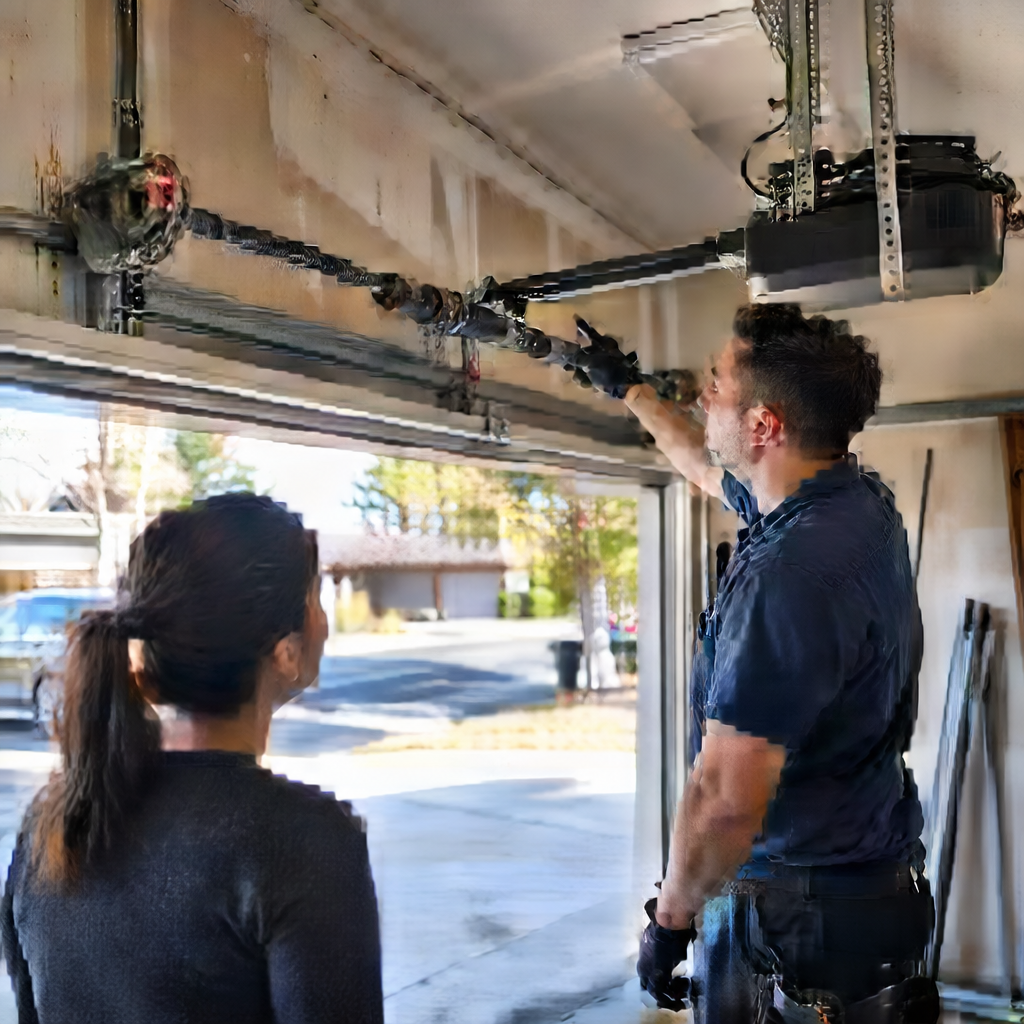
That Grinding Noise Your San Jose Garage Door Makes Is Telling You Something — Here’s What
A grinding noise from a garage door almost always points to one of three things: worn or dry rollers dragging against the track, a torsion spring that’s losing its tension, or a garage door opener’s drive gear starting to strip. In most cases, catching it early means a repair in the $130–$400 range — ignore it long enough and you’re looking at a full opener replacement or a snapped spring that stops the door cold. If yours is grinding right now, call (833) 991-7288 and Anthony Perez will take a look before a small problem becomes a bigger one.

Why San Jose Homes Hear This Noise More Than You’d Expect
Here’s something Anthony notices constantly working through the Berryessa and Cambrian neighborhoods: the grinding doesn’t always start in summer when everything dries out. It tends to show up in the spring, after months of San Jose’s morning marine layer has pushed cool, damp Bay air into the Santa Clara Valley night after night. That daily thermal cycling — cold and moist at 6 a.m., warm and dry by noon — works torsion springs and roller stems through repeated micro-expansion and contraction. Steel fatigues. Grease dries out and gums up rather than lubricating. Nylon rollers crack at the stem collar where you can’t easily see them.
The postwar ranch homes along Story Road and through East San Jose compound the issue. Many of those doors are running on original or near-original hardware — 40 to 50 years of cycles on rollers that were designed to last maybe 10,000 open-and-close operations. At two cycles a day, that math ran out a long time ago. A garage door doesn’t lie — it shows you exactly what’s been ignored.
For the larger three-car setups in Evergreen and Silver Creek, the equation shifts slightly. Heavier doors put more load on every moving component, so a grinding noise on a 16-foot insulated Clopay door tends to escalate faster than the same sound on a lighter single panel. The drive gear inside a Chamberlain or Genie opener working against a heavier-than-expected load strips faster, and those repairs run $140–$380 depending on whether the gear assembly alone needs replacing or the whole opener head is compromised.
The Most Common Causes, Ranked by What We Actually See Most Often
After 14 years and hundreds of doors across San Jose, the causes break down pretty predictably. Here’s the honest frequency breakdown:
- Worn or unlubricated rollers ($130–$260 to replace): The single most common grinding culprit. Rollers — especially the cheap nylon ones builders put on tract homes — develop flat spots and cracked flanges. When those rough edges drag against the steel track, the sound is a low, rhythmic grind timed to the door’s movement.
- Torsion spring fatigue ($210–$400 to repair): A spring that’s lost tension doesn’t just fail suddenly — it often drags the door through uneven resistance first, which makes the opener motor strain and grind against the load. Do not attempt to inspect or adjust torsion springs yourself. These springs store enormous mechanical energy and can cause serious injury if handled without proper training and tools. This is a job for a trained technician, full stop.
- Track misalignment ($140–$285 to realign): Even a quarter-inch of lateral shift in a vertical track section forces the rollers to scrub against the rail edge rather than roll cleanly through it. You’ll often hear this as an intermittent grind — worse at one specific point in the travel.
- Opener drive gear wear ($140–$380 to repair): Chamberlain and Genie chain-drive openers use a plastic drive gear that meshes with a steel worm gear. When the nylon starts to strip, the sound is more of a grinding-skipping combination and the door may stutter or refuse to fully open.
- Cable fraying on the drum ($155–$295 to repair): A cable that’s slipped or started to unravel can create a grinding or scraping sound as it catches against the cable drum or the drum housing. Like springs, cables under tension are genuinely dangerous — don’t pull at a frayed cable to inspect it.
How to Narrow Down the Cause Before You Call
You don’t need to be a technician to gather useful information. Running through this quick sequence before calling (833) 991-7288 helps Anthony diagnose faster and quote more accurately — which saves you time on both ends.
- Listen for when the sound happens. Does it grind throughout the full travel, or only at a specific point (top third, bottom foot)? A grinding confined to one spot often means a track problem or a single damaged roller. Grinding the whole way usually points to multiple dry rollers or a spring issue.
- Watch the door move. Does it hesitate, shudder, or visibly tilt during travel? Uneven movement with grinding is a strong indicator of a spring losing tension or a track that’s pulled out of plumb.
- Check whether the sound comes from the opener head or the door itself. Disconnect the opener (pull the red emergency cord — gently, with the door closed and fully seated) and manually lift the door. If the grinding disappears, the problem is in the opener’s drive mechanism. If it persists, it’s in the door’s mechanical hardware.
- Note the door’s age and last service. A Clopay or Amarr door installed before 2005 that’s never had rollers or springs serviced is almost certainly overdue on both. That history matters for quoting accurately.
For anything beyond that visual and audio check — especially if the door is heavy, partially open, or you suspect a spring issue — stop and call. The Garage Door Repair in San Jose service covers exactly these situations, and Anthony handles the diagnosis in person rather than guessing over the phone.
What Repairs Typically Cost in San Jose
Pricing varies based on the specific failure, the door’s brand and weight, and parts availability — but here’s a realistic range for the repairs that most commonly address grinding noises:
| Repair Type | Typical San Jose Range |
|---|---|
| Roller Replacement | $130–$260 |
| Track Realignment | $140–$285 |
| Opener Repair (gear/drive) | $140–$380 |
| Cable Repair | $155–$295 |
| Spring Repair | $210–$400 |
Those ranges assume a standard residential door. Pre-2019 openers being replaced trigger California’s AB 869 battery-backup requirement, which adds cost but also adds real value — especially in a city that sits near the Hayward and Calaveras faults. If your opener is going out anyway, that’s a conversation worth having at the time of repair, not after. For broader Garage Door Repair context, that page covers the full scope of what a typical service visit addresses.
FAQs: Garage Door Grinding Noise in San Jose
The grinding you hear when the door opens is most likely worn rollers dragging against the track or a drive gear in the opener beginning to strip — both are among the most common findings on San Jose homes, particularly those built in the 1960s–80s with original hardware still in place. If the grinding only happens when the opener is engaged but stops when you disconnect and lift manually, the problem is almost certainly in the opener’s drive mechanism. Either way, it’s worth having a technician confirm before the component fails completely. Call (833) 991-7288 for a free estimate.
It can be, depending on the cause — a torsion spring under failing tension or a fraying cable carries real injury risk if it lets go unexpectedly, and neither should be handled without proper training and tools. Worn rollers and minor track misalignment are lower-urgency but will worsen and can eventually jam the door or damage the track permanently. Don’t leave a grinding door unattended for weeks; the repair that costs $130–$260 today can turn into a $400–$700 job if the secondary damage compounds.
Lubrication fixes the grinding about 30% of the time — specifically when the cause is dry rollers or a dry torsion spring coil rather than physical wear or mechanical failure. Spray a silicone-based lubricant (not WD-40, which dries out and attracts grit) on the roller stems, hinges, and spring coils, run the door a few times, and see if the sound changes. If it doesn’t improve within two or three cycles, the underlying hardware is worn and lubrication is masking a problem rather than solving it.
Most grinding-related repairs in San Jose fall between $130 and $400 depending on the specific cause — roller replacement runs $130–$260, spring repair $210–$400, and opener drive-gear repairs $140–$380. The total lands at the lower end when the problem is isolated to one component caught early; it climbs when wear has spread to multiple parts or when a pre-2019 opener needs a battery-backup-compliant replacement under California AB 869. Call (833) 991-7288 for an accurate quote — the estimate is free.
Ready to Stop the Grinding?
If your garage door is grinding and you’d rather have it looked at by someone who’ll tell you straight what’s wrong and what it’ll actually cost, Premier Garage Door Service San Jose is the call to make. Anthony Perez comes out personally — no dispatch, no crew you’ve never met. Call (833) 991-7288 for a free, no-pressure estimate.
Written by Anthony Perez, Owner & Lead Technician at Premier Garage Door Service San Jose, serving San Jose, CA.