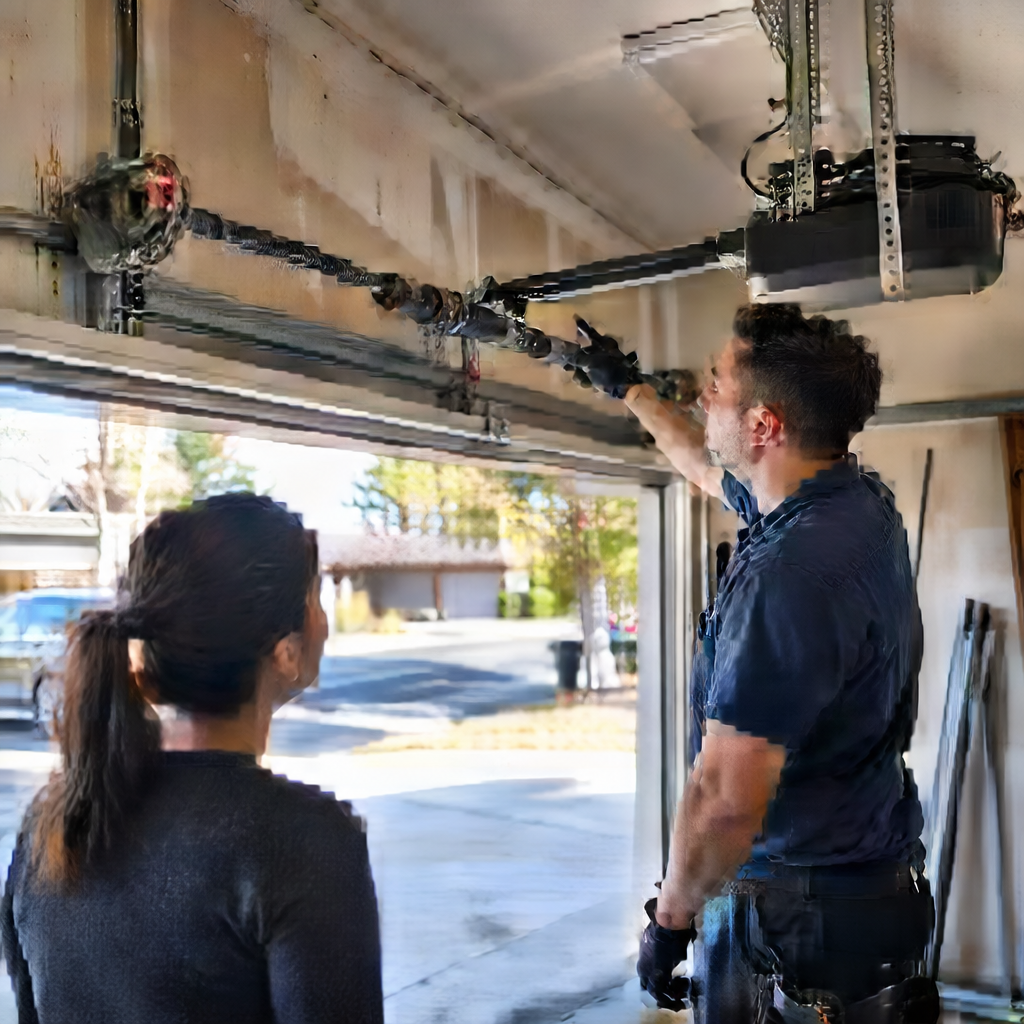
Garage Door Maintenance Tips for San Jose, CA — A Schedule That Actually Matches This Climate
The most useful garage door maintenance tips for San Jose homeowners come down to one adjustment most guides skip: inspect and lubricate every six months, not once a year, because the marine-layer cycle here degrades weatherseals and fatigues torsion springs on a faster timeline than national checklists assume. If your door is on a 40-year-old track in Berryessa or a 3-car configuration in Evergreen, that gap matters even more. Questions right now? Call (833) 991-7288 — Anthony Perez handles every assessment personally.
Why the Standard “Once a Year” Advice Fails San Jose Doors
Most maintenance guides were written for climates that stay dry or cold — not for a valley where cool, moisture-laden Bay air rolls in every morning and a warmer, drier afternoon burns it off six days out of seven. That daily thermal swing isn’t dramatic by itself, but run it 300-plus days a year and it quietly does real work on two of your door’s most critical components.
Bottom weatherseals harden and crack faster here. Rubber compounds stiffen from repeated wetting and drying. In a genuinely dry climate, the same seal might stay pliable for four or five years. In San Jose’s marine-layer corridor, Anthony regularly sees seals splitting at the two-to-three-year mark on doors that were properly serviced on an annual schedule. Once a seal cracks, it stops keeping out moisture, pests, and drafts — and the repair cost is minor compared to the floor damage that follows.
Torsion springs take a daily thermal beating. Steel coils contract in the cool morning air and expand when afternoon temperatures climb. Each cycle is small, but a residential torsion spring operates roughly 10,000 cycles over its rated lifespan. Add the morning-to-afternoon swing on top of normal open/close cycles and you’re accelerating microstress in the coil metal. Anthony sees this pattern most clearly on older Wayne Dalton and Craftsman systems in the Cambrian and Alum Rock neighborhoods, where 1970s-era hardware was never designed with this kind of thermal load in mind.
A garage door doesn’t lie — it shows you exactly what’s been ignored. Catching fatigue early means a spring repair that runs $210–$400 in the San Jose market rather than an emergency call and possible door damage when a coil finally snaps under load.
How to Read Your Torsion Spring Before It Reads You
This is the maintenance step competitors reliably skip, probably because it requires knowing what to look for. Torsion springs sit on the metal shaft directly above your door opening. Never attempt to adjust, wind, or remove a torsion spring yourself — these are high-tension components that can cause serious injury if released unexpectedly. What you can do safely is a visual check from the floor without touching anything.
Here’s what early fatigue looks like:
- Uneven coil spacing: The gaps between coils should be consistent along the entire spring. If one section is tighter or wider than the rest, that section is under uneven stress.
- A slight bow or curve: A healthy torsion spring runs straight along its length. Any visible arc, even subtle, signals metal fatigue.
- Surface rust in streaks: Moisture from morning condensation collects in coil gaps. Rust doesn’t just look bad — it weakens the steel and shortens the spring’s remaining service life.
- The door feels heavier than usual: Disconnect the opener and lift the door manually to chest height, then let go. It should hold position or drop very slowly. If it falls or won’t stay up, spring tension is off.
Spot any of these? That’s a call-a-professional moment, not a watch-a-video moment. Our home page covers the full scope of what we service if you want context on what a complete inspection involves.
A San Jose–Specific Maintenance Checklist (Every 6 Months)
- Inspect the bottom weatherseal end-to-end. Press the seal against a flat surface — it should compress without cracking. Check the corners first; that’s where San Jose’s thermal cycling splits rubber earliest.
- Lubricate the torsion spring, rollers, and hinges. Use a lithium-based spray or silicone lubricant — never WD-40, which strips the protective coating and invites rust. A single pass on the spring coils, a shot on each roller stem, and a wipe on the hinge pivot points.
- Test the auto-reverse safety function. Place a 2×4 flat on the ground under the door. Trigger the close cycle; the door should reverse on contact. If it doesn’t, the force sensitivity needs adjustment — don’t skip this, it’s a required safety feature.
- Check the emergency release cord. Pull it smoothly to verify it disengages the trolley. Given that both the Calaveras and Hayward faults run through the San Jose metro, a door that only works electrically is a real liability when power goes out at 2 a.m. after a seismic event.
- Confirm battery backup is functional. California’s AB 869 requires all new residential openers sold after July 1, 2019 to include battery backup — a law shaped in part by Bay Area power-outage experience after major events. If your opener doesn’t have one, this is the right moment to have that conversation. An opener installation in San Jose typically runs $295–$650 depending on the unit, and LiftMaster’s battery-backup models fall in the mid-range of that window.
- Inspect rollers and tracks for debris. San Jose’s older ranch homes — particularly along the Story Road corridor and through Berryessa — accumulate fine dust and leaf debris in tracks more than newer construction does. A buildup that looks minor can throw a door off-axis over time.
- Tighten visible hardware. Vibration works bolts and lag screws loose over thousands of cycles. A 10-minute pass with a socket wrench on the bracket bolts, track fasteners, and opener mounting hardware prevents misalignment problems that cost far more to fix later.
The AB 869 Compliance Moment You Might Be Missing
Here’s a scenario Anthony sees regularly in East San Jose and Cambrian: a homeowner calls for a tune-up on their Craftsman opener, everything looks mechanically sound, and the conversation turns to battery backup — which their 2014-era unit doesn’t have. They weren’t aware it was now a compliance issue for any replacement unit, and they’d never thought about what happens to a door with a failed spring and no power after a major earthquake.
A maintenance visit is the natural moment to surface this. If your opener predates July 2019 and you’re planning to stay in the house long-term, the upgrade cost is predictable and the safety case is real — not a upsell, just an honest accounting of what you have versus what the current standard requires. Anthony gives that assessment directly, without handing it off to someone who wasn’t at the job.
FAQs: Garage Door Maintenance in San Jose
Lubricate your garage door’s springs, rollers, and hinges every six months in San Jose — not the once-a-year schedule most national guides recommend. The marine-layer humidity cycle here accelerates rust and rubber degradation enough that a six-month interval catches problems while they’re still inexpensive to fix. Use a lithium or silicone-based spray, not WD-40.
A professional maintenance visit in San Jose typically falls within our standard repair range of $175–$710 depending on what the inspection uncovers and what parts need attention. If only lubrication, hardware tightening, and adjustments are needed, the cost is on the lower end. If a spring shows fatigue, expect spring repair pricing of $210–$400. Call (833) 991-7288 for a free assessment — Anthony gives you a straight answer on what actually needs doing.
You can safely handle lubrication, visual inspections, hardware tightening, and the auto-reverse test yourself. Anything involving torsion springs, cable tension, or track realignment should go to a professional — high-tension spring components can cause serious injury if handled incorrectly. A trained technician also has the pattern recognition to spot early fatigue signs that aren’t obvious to a homeowner doing it for the first time.
Yes — California AB 869 requires all new residential garage door openers sold in the state since July 1, 2019 to include battery backup. If you’re still running a pre-2019 unit, it’s legal to keep it, but any replacement must include backup power. Given San Jose’s proximity to the Hayward and Calaveras faults, this isn’t just a code requirement — it’s genuinely worth having. Opener installation runs $295–$650 in the San Jose market; call (833) 991-7288 to find out where your setup lands in that range.
Anthony Perez, Owner and Lead Technician at Premier Garage Door Service San Jose, has been doing this work across San Jose neighborhoods for 14 years and has earned 524 verified reviews at a 4.7-star rating from real neighbors who’ve been through exactly the situations described on this page. If your door is due — or overdue — for a proper look, call (833) 991-7288. The assessment is free, the answer is direct, and Anthony’s the one who shows up to give it.
Written by Anthony Perez, Owner & Lead Technician at Premier Garage Door Service San Jose, serving San Jose, CA.