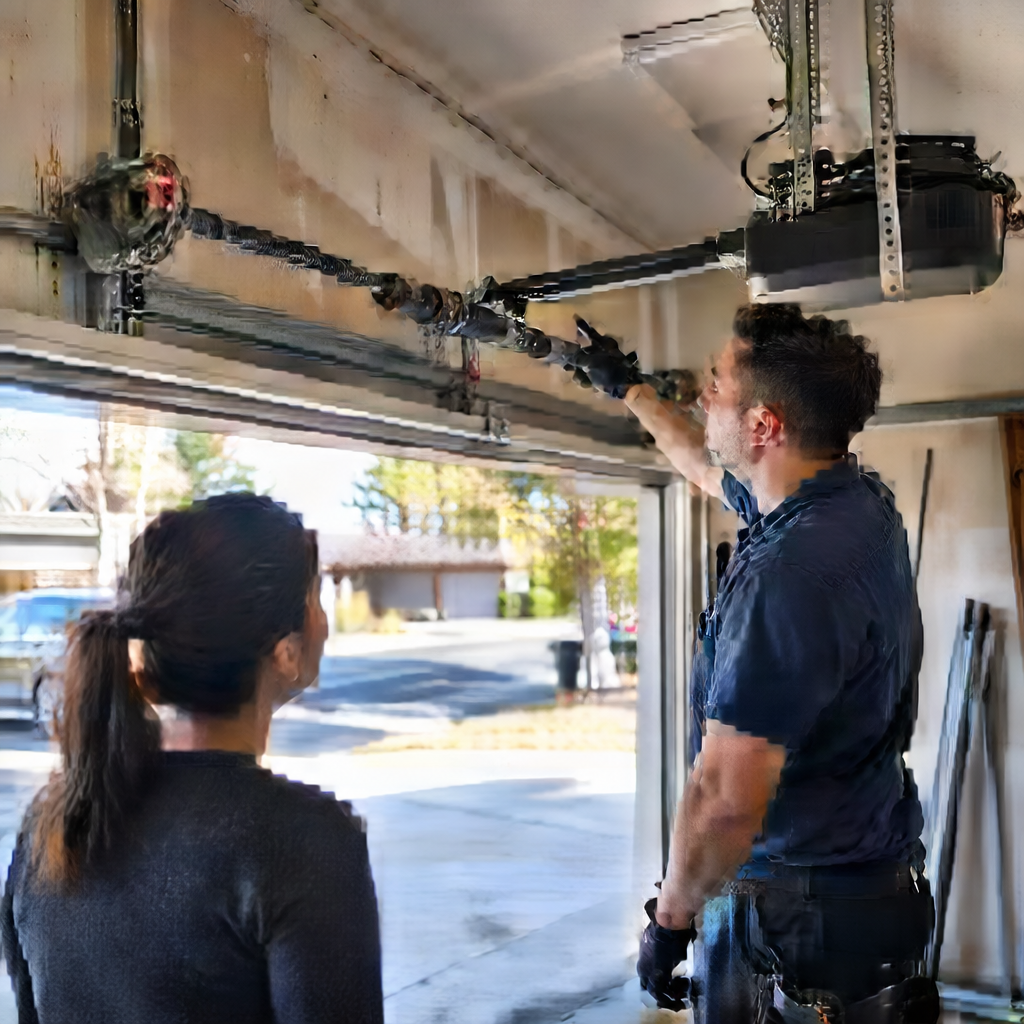
Why Your Garage Door Keeps Reversing — and What’s Actually Causing It in San Jose
A garage door reverses before closing — or immediately after touching the floor — because something is telling it to stop: misaligned safety sensors, incorrect limit or force settings on the opener, a physical obstruction, or a mechanical issue like a worn spring or binding track. In San Jose, the most common trigger we see is dirty or sun-shifted photo-eye sensors, followed closely by limit settings that drifted after the marine-layer temperature swings that cycle through the Santa Clara Valley nearly every morning. If your door is reversing right now, call (833) 991-7288 — Anthony Perez can usually diagnose it over the phone before committing you to a visit.

The Most Common Reasons a Garage Door Reverses
There’s no single answer, but there’s a reliable short list. After 14 years and hundreds of San Jose doors, Anthony Perez has worked through this diagnosis so many times that a garage door’s behavior pattern usually points to the culprit before he even pulls a tool.
Misaligned or Dirty Photo-Eye Sensors
Every residential opener made after 1993 has a pair of photo-eye sensors mounted a few inches off the ground on either side of the door opening. When their beam is broken or the lenses are dirty, the opener interprets that as an obstruction and reverses. In San Jose’s Berryessa and Cambrian neighborhoods — where a lot of attached-garage ranch homes from the 1960s and 70s are still running their original framing — we often find the sensor brackets have shifted over decades of thermal cycling. The door looks fine from outside; the sensor is just staring at the wall instead of its partner. A quick realignment takes minutes, but if you’ve been chasing this issue for months with a can of compressed air, the bracket mount itself may need to be replaced.
What to check yourself: Look at the two small sensors near the floor on each track. Both should have a solid light (no blinking). If one is blinking or dark, that’s your culprit. Clean the lenses with a dry cloth first. If the light stays off, the sensor is out of alignment or failing.
Incorrect Limit and Force Settings
Your opener has two adjustments that tell it where “down” is and how hard to push to get there. If the down-limit is set too far, the door hits the floor and the opener thinks it hit an obstacle — so it reverses. If the force setting is too low, even minor resistance from a stiff weatherseal triggers a reverse. In San Jose, the daily marine-layer cycling — cool, damp Bay air pushing in each morning before burning off — causes bottom weatherseals to harden and crack faster than most homeowners expect. A seal that’s stiffened up over a winter adds enough drag to trip a force sensor that was calibrated when the seal was new.
LiftMaster and Chamberlain openers have physical adjustment screws for these settings on the rear or side panel of the motor unit. Genie units often use a button sequence. If you’re not sure which you have or where the adjustments are, that’s a reasonable time to call rather than guess — incorrectly increasing force settings can mask a real mechanical problem.
Spring or Hardware Problems Creating Resistance
A torsion spring that’s lost tension or a track that’s slightly out of alignment creates drag as the door travels. The opener’s built-in auto-reverse senses that drag as an obstacle and stops the door — which is the safety system working correctly. The problem isn’t the reversal; it’s the mechanical issue underneath it. San Jose’s marine air gradually fatigues torsion springs through repeated thermal contraction and expansion, and we see a cluster of spring failures every late winter in neighborhoods like Alum Rock and East San Jose where older hardware has been cycling through the temperature range for 30–40 years.
A word on springs: Torsion springs are under serious tension. Diagnosing that a spring has lost tension is safe — trying to adjust or replace it without the right training and tools is genuinely dangerous. If the door feels heavy when you lift it manually or one side seems lower than the other, flag it for a professional.
Spring repair in the San Jose market typically runs $210–$400. Track realignment, if that’s the drag source, is usually $140–$285. You can get a straight answer on cost at Garage Door Repair in San Jose or by calling directly.
A Worn or Blocked Opener Logic Board
Less common but worth knowing: if the opener is reversing randomly — not consistently tied to a specific point in travel — the logic board itself may be failing. This shows up more often in openers that are 15 or more years old. In the Evergreen and Silver Creek areas, where large tech-executive homes with 3-car configurations put heavier demand on opener units, we’ve seen logic boards fail after years of running heavier doors repeatedly. Opener repair runs $140–$380 depending on the unit; if a board replacement approaches the cost of a new opener, Anthony will tell you that plainly rather than patch something that won’t last.
How to Troubleshoot a Reversing Garage Door — Step by Step
- Check the sensors first. Look at both photo-eye units near the floor. Both lights should be solid, not blinking. Clean the lenses. If one light is still off, gently nudge the sensor bracket until the light comes on solid, then tighten the wing nut.
- Test the balance manually. Disconnect the opener (pull the red emergency cord) and lift the door by hand to about waist height. Let go. A balanced door stays put. A door that drops or flies up has a spring problem — stop here and call a pro.
- Inspect the weatherseal. Run your hand along the bottom seal. If it’s cracked, stiff, or missing chunks, that added resistance may be tripping the force sensor. Weatherseal replacement is an inexpensive fix.
- Look for track obstructions or debris. A pebble, a bent section of track, or a roller that’s jumped its guide can create drag at a specific point in travel. Shine a flashlight along both tracks and look for anything obvious.
- Adjust limit settings cautiously. If the door reverses right at the floor, try a small down-limit adjustment — usually a quarter turn at a time. Refer to your opener manual for the exact procedure. If you’re working with a LiftMaster or Chamberlain unit and can’t locate the manual, the model number is typically on a sticker on the motor housing.
- If nothing above solves it, stop and call. Random reversal at no consistent point, or a door that feels heavy, means the issue is mechanical — springs, cables, or hardware — and that’s where DIY stops being a good idea.
Anthony grew up in Willow Glen and learned the mechanical side of this trade through hands-on building trades coursework at Evergreen Valley College — his diagnostic approach comes from that foundation, not guesswork. As he’d put it: a garage door doesn’t lie — it shows you exactly what’s been ignored.
What Repairs Actually Cost in San Jose
These are real market ranges for San Jose, not national averages pulled from a content database:
| Repair Type | Typical San Jose Range |
|---|---|
| Sensor realignment or replacement | $175–$250 (included in general repair visit) |
| Spring repair | $210–$400 |
| Track realignment | $140–$285 |
| Opener repair | $140–$380 |
| Roller replacement | $130–$260 |
| Full garage door repair (diagnostic + fix) | $175–$710 |
Estimates are free. Call (833) 991-7288 and Anthony can often narrow the range before scheduling anything. For the full scope of what a repair visit covers, the Garage Door Repair page has more detail on what’s included.
Frequently Asked Questions
Your garage door reverses right after closing most often because the down-limit setting is too high — the opener hits the floor, registers it as an obstacle, and reverses as a safety measure. Check whether the door is fully contacting the floor evenly; if one side lifts slightly before the other, a limit or spring adjustment is the fix. Call (833) 991-7288 for a free estimate.
A garage door that reverses mid-travel — before ever touching the floor — is usually hitting resistance somewhere in the travel path: a dirty sensor beam, a bent track, a stiff roller, or a spring that’s lost tension. The opener’s auto-reverse trips when it measures too much resistance at any point, not just at the bottom. This is the safety system doing its job; the underlying cause needs to be found.
Sensor cleaning, limit adjustments, and weatherseal replacement are reasonable DIY tasks. Anything involving springs or cables is not — those components store significant mechanical energy, and an uncontrolled release causes serious injury. If the manual balance test (step 2 above) shows the door is heavy or unbalanced, that’s a job for a trained technician.
The repair cost in San Jose depends on the root cause: a sensor fix or limit adjustment typically falls in the $175–$250 range as part of a diagnostic visit, while a spring repair runs $210–$400 and opener repair runs $140–$380. The only way to know exactly is a hands-on diagnosis — call (833) 991-7288 for a free estimate with no pressure attached.
Still Reversing? Let’s Look at It
If you’ve worked through the steps above and the door is still reversing, or if the manual balance test flagged a spring problem, that’s when a trained set of eyes saves time and avoids a bigger repair down the road. Premier Garage Door Service San Jose serves homeowners across San Jose with no-pressure diagnostics — call (833) 991-7288 and Anthony will give you a straight answer on what’s going on and what it’ll cost to fix it.
Written by Anthony Perez, Owner & Lead Technician at Premier Garage Door Service San Jose, serving San Jose, CA.